LAB Media Productions
ROOM 04 / STRATEGY ROOMYou do not need to know the “right” words. A goal, deadline, rough idea, example, or “I know what I want when I see it” is enough. We help turn it into a clear plan.
Process / Strategy Room

PROCESSTHE STRATEGY ROOM

This is where we decide what you need, what comes first, and what the finished work should accomplish. You can arrive with a finished plan or one sentence like “I need help with my website.” We turn that into clear next steps.

PLAIN ENGLISH // FIRST WE UNDERSTAND IT · THEN WE PLAN IT · THEN WE BUILD IT
QUICK TRANSLATION: STRATEGY = THE PLAN · SCOPE = WHAT IS INCLUDED · HANDOFF = WHEN YOU RECEIVE THE FINISHED WORK
PLANNING TABLE / READY
PLAN B / BUILT AROUND YOU
01GoalWhat are we trying to do?
02IncludedWhat are we making?
03OrderWhat comes first?
04BuildMake the work.
05ReviewWhat should change?
06DeliverLaunch or hand it over.
YOU ARE HEREGoal first.
Plan second.
You know what you want to achieve.
You do not have to know which type of work gets you there.
WHAT DO YOU ALREADY KNOW?
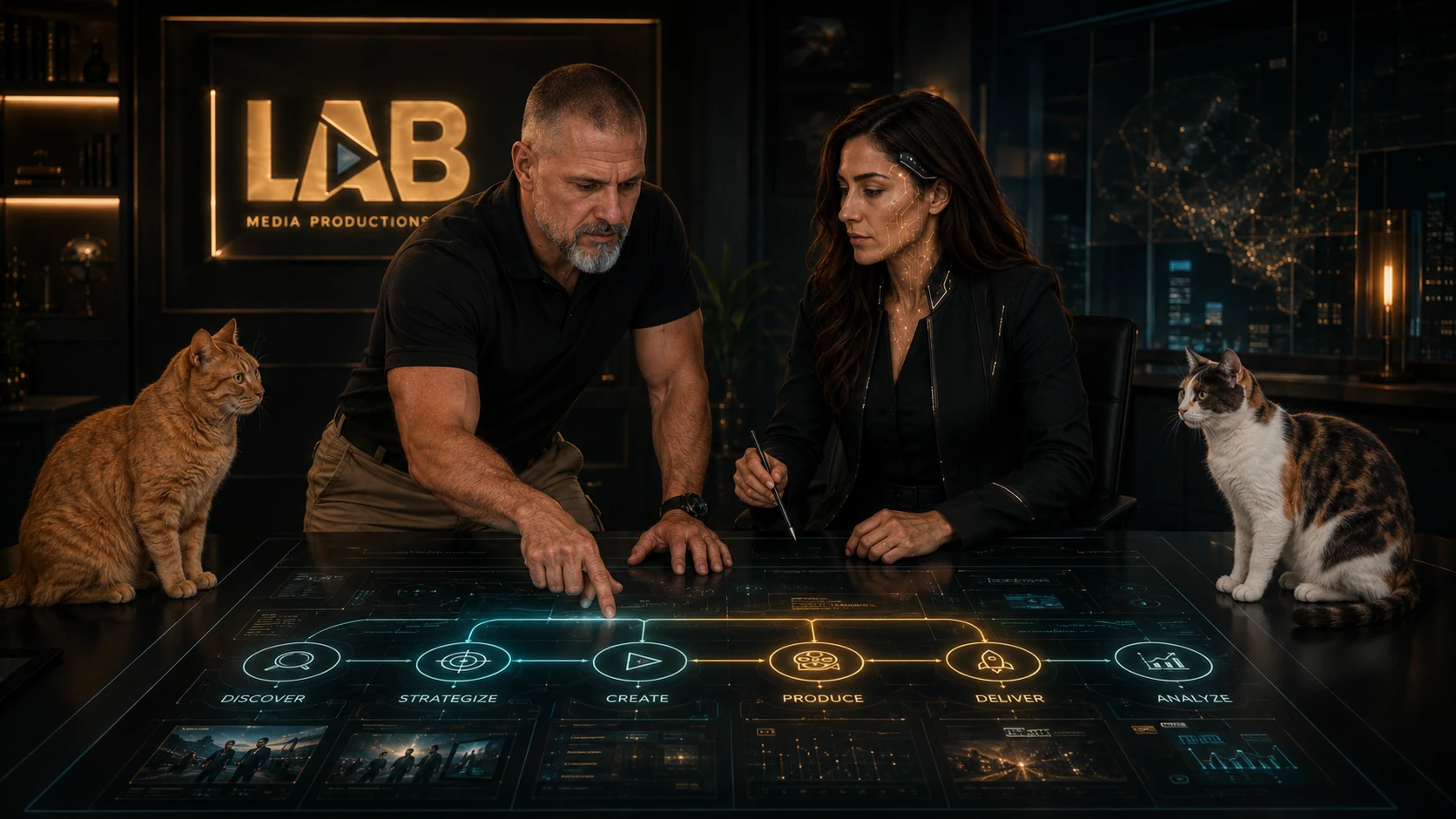
Luiz, Evelyn, Thorin and Adeleine gathered around a glowing LAB Media Productions planning table
STRATEGY ROOM / TEAM ONLINE
THE ROOM / BEFORE WE BUILDIdeas become a plan here.
Luiz, Evelyn, Thorin and Adeleine at the table. The executive team has opinions.

You do not need to know the “right” words.

Tell us the simple version. What are you trying to change? What feels missing? What already exists? We ask the questions that turn that into something we can build.

WHAT WE KNOW / A

“I need a website.”

We ask who needs to use it, what you want them to do, what words and pictures you already have, and whether the site needs to connect to things like booking, payments, forms, or email.

STARTING POINT: A WEBSITE IS NEEDED
WHAT WE KNOW / B

“I want my business to look more professional.”

We figure out the smallest useful mix of website work, photos, video, graphics, or content that would actually help. You do not have to choose the services first.

STARTING POINT: THE GOAL IS CLEAR
WHAT WE KNOW / C

“My website, photos, videos, and social media all feel unrelated.”

We look at what should match, what can stay exactly as it is, and what needs to be changed so the pieces feel like they belong to the same business.

STARTING POINT: THE PIECES NEED TO WORK TOGETHER
WHAT HAPPENS NEXT?We ask a few plain questions.

You do not have to turn your idea into business jargon. Pick one of the examples above to see how we would start.

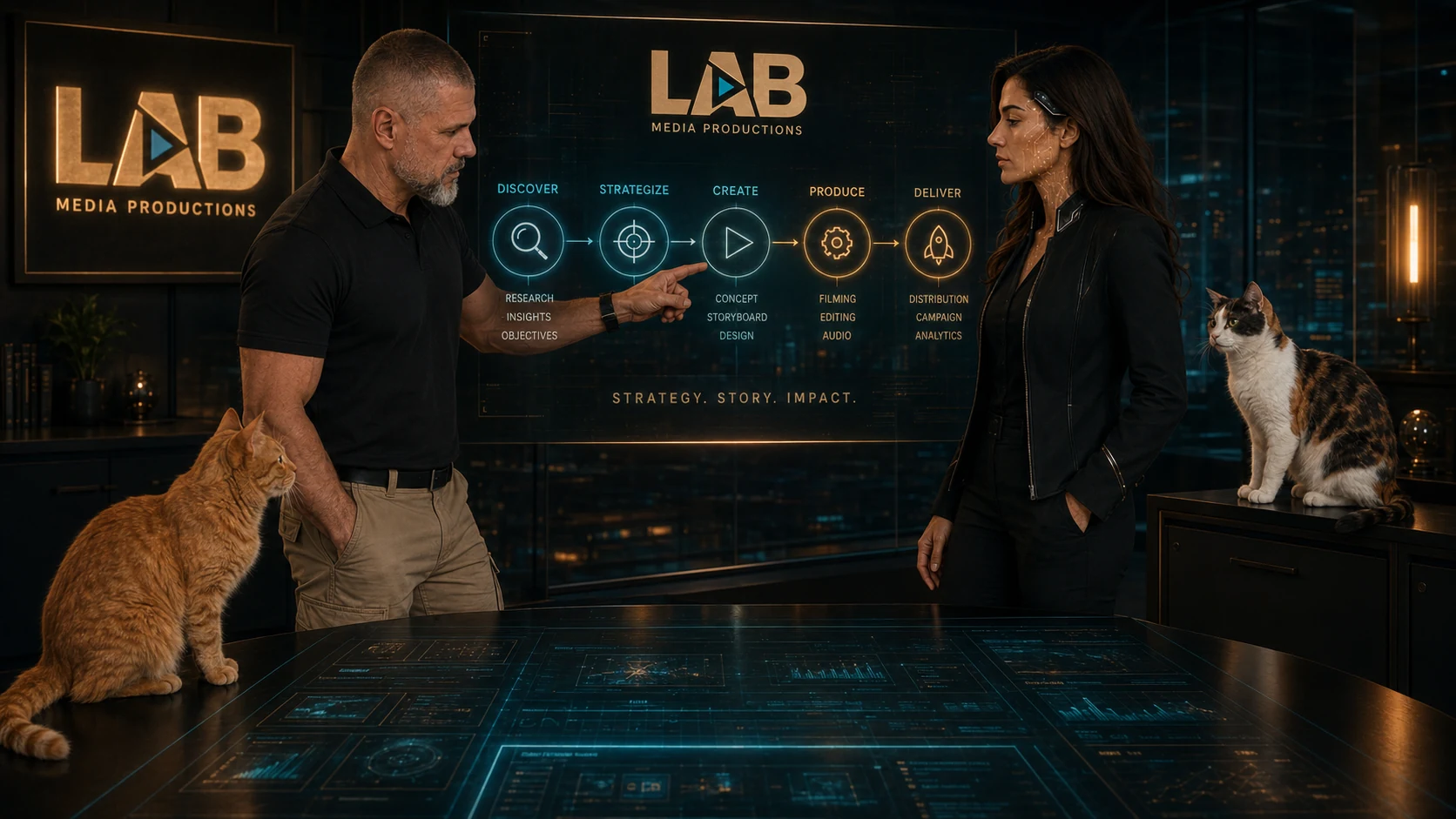
LAB Media Productions team reviewing a clear step-by-step process board
PATH / VISIBLE
THE PATH / EASY TO FOLLOWYou can see where the work is going.
A clear route means fewer surprises and fewer “what happens now?” moments.

Six steps. You always know what happens next.

Projects are not all identical, but the basic path is easy to understand: understand the goal, agree on what we are making, put the work in order, build it, review it, then launch or deliver it. Click a step to see what it means.

STEP 01 / UNDERSTAND
Start with the real goal.
We ask what you want to change, who the work is for, what already exists, what the deadline is, and what matters most. You can answer in normal everyday language.
WHAT WE DO

We organize what you already know.

We separate the things that are required from the things that would simply be nice to have, and we flag questions that still need an answer.

WHAT YOU GET

A clear starting point.

You can see what the project is trying to accomplish and what deserves attention first.

WHAT WE MAY NEED FROM YOU

Your honest version.

Goals, deadlines, examples, existing files, and reactions like “I like this” or “this does not feel like us” are useful.

THE DETAILS CHANGE FROM PROJECT TO PROJECT · THE STEPS STAY EASY TO FOLLOW

New idea? We tell you what it changes.

“Scope” is just a business word for what we agreed to make. New ideas are normal. When one appears, we tell you whether it fits the current plan, replaces something else, waits until later, or needs its own price and timeline.

Change the plan on purpose.

No quiet surprises. You see the choice before we change the work: add it, trade something for it, save it for later, or treat it as separate work.

NEW IDEA / EXAMPLESTATUS: CHOOSE WHAT HAPPENS
NEW IDEA

“Could we add online booking too?”

Good idea. Now we decide whether it belongs in the work we already agreed on or should be handled another way.

SAVE IT FOR LATER: Keep the current project moving. Write down the booking idea so it is not lost, then revisit it after the work needed for launch is finished.
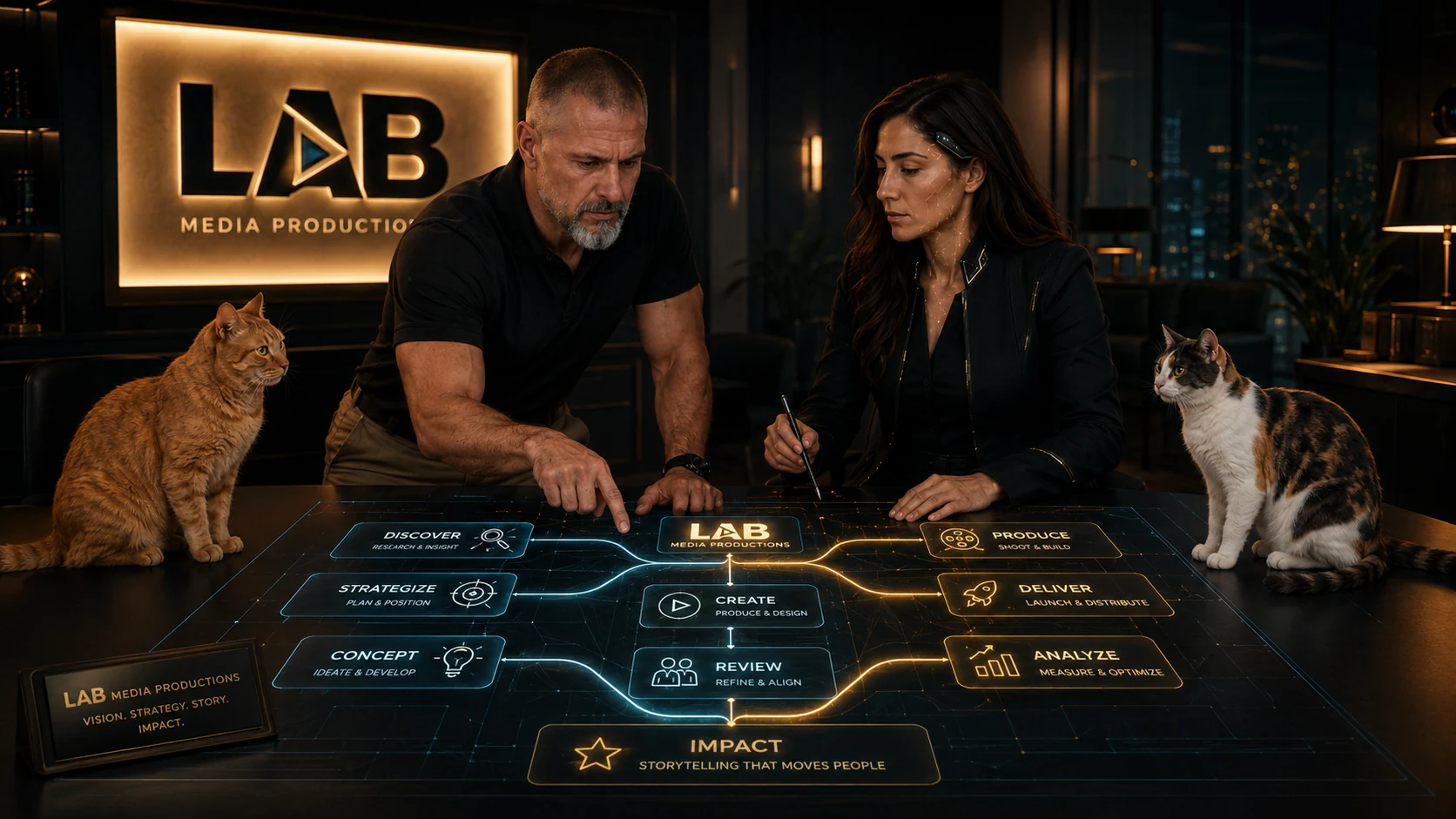
Luiz and Evelyn reviewing a LAB Media Productions project map with Thorin and Adeleine nearby
PLAN / ADJUSTABLE
THE PLAN / BUILT TO ADAPTNew ideas are welcome. We decide what changes first.
The goal is flexibility without letting the project quietly turn into a different project.

Feedback should be easy to give and easy to follow.

You do not need design vocabulary. Tell us what feels right, wrong, confusing, too formal, too busy, too slow, or simply “not like us.” We connect that reaction to a specific change. Tap a numbered note in the example below.

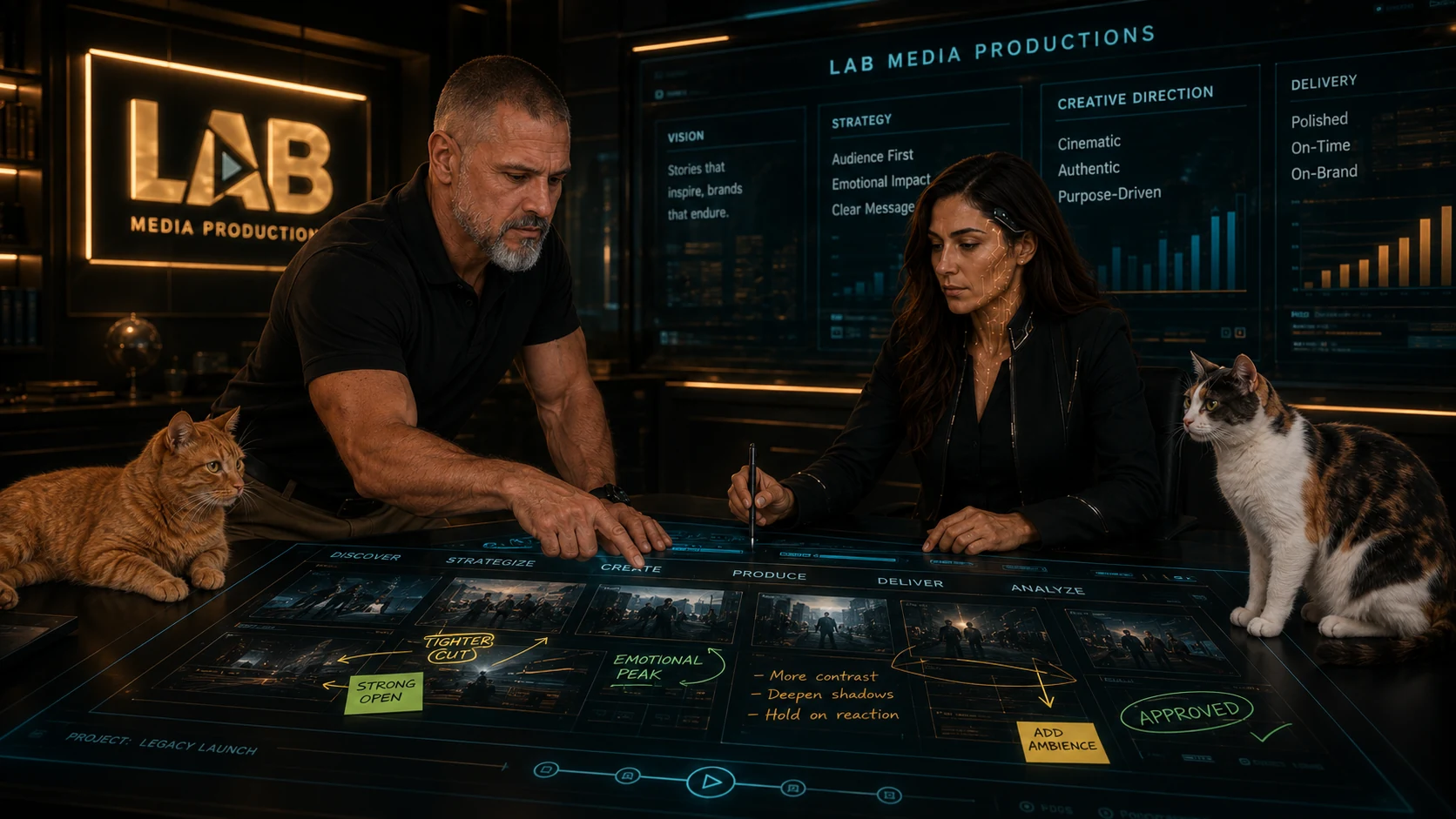
LAB Media Productions team reviewing creative work and notes together in the Strategy Room
REVIEW / TOGETHER
THE REVIEW / ONE SHARED VIEWLook at the work. Point to what feels right or wrong.
You do not need design language. Your reaction gives us something useful to work with.

You should never have to wonder, “What is happening?”

At important points, we keep four things easy to see: what we are working on now, what comes next, what changed, and what we need from you. Click a card to see a simple example.

◎

Working on now

The part we are actively building and why it matters right now.

→

Coming next

The next useful step, so “we are working on it” never has to be the whole update.

∆

What changed

Anything that moved away from the plan, plus what that change means for the project.

◌

What we need from you

A photo, approval, password, answer, or other item we need before the next step can move.

EXAMPLE PROJECT UPDATEWorking on now

We are building the homepage layout now because the rest of the website will use the same visual rules.

Small job, short path. Bigger job, more checkpoints.

A single video should not feel like a giant corporate project. A website plus photos, video, and content needs more coordination than one flyer. We use only as much process as the work actually needs.

PATH / FOCUSED

One useful piece

One website update, video, photo session, graphic package, or another clearly defined piece of work.

Fewer moving parts · fewer approvals · direct delivery
PATH / CONNECTED

Several pieces, one direction

For example: a website, photos, and video that should share the same message and visual style.

Shared decisions · coordinated production · one clear direction
PATH / FULLER BUILD

A fuller business presence

When several parts of how the business looks and communicates need to work together over time.

More moving parts · work done in stages · pieces built to keep working together
WHAT THIS FEELS LIKEShort route. Clear finish line.

We still understand, agree, build, review, and deliver. There are simply fewer pieces to coordinate, so the path is lighter.

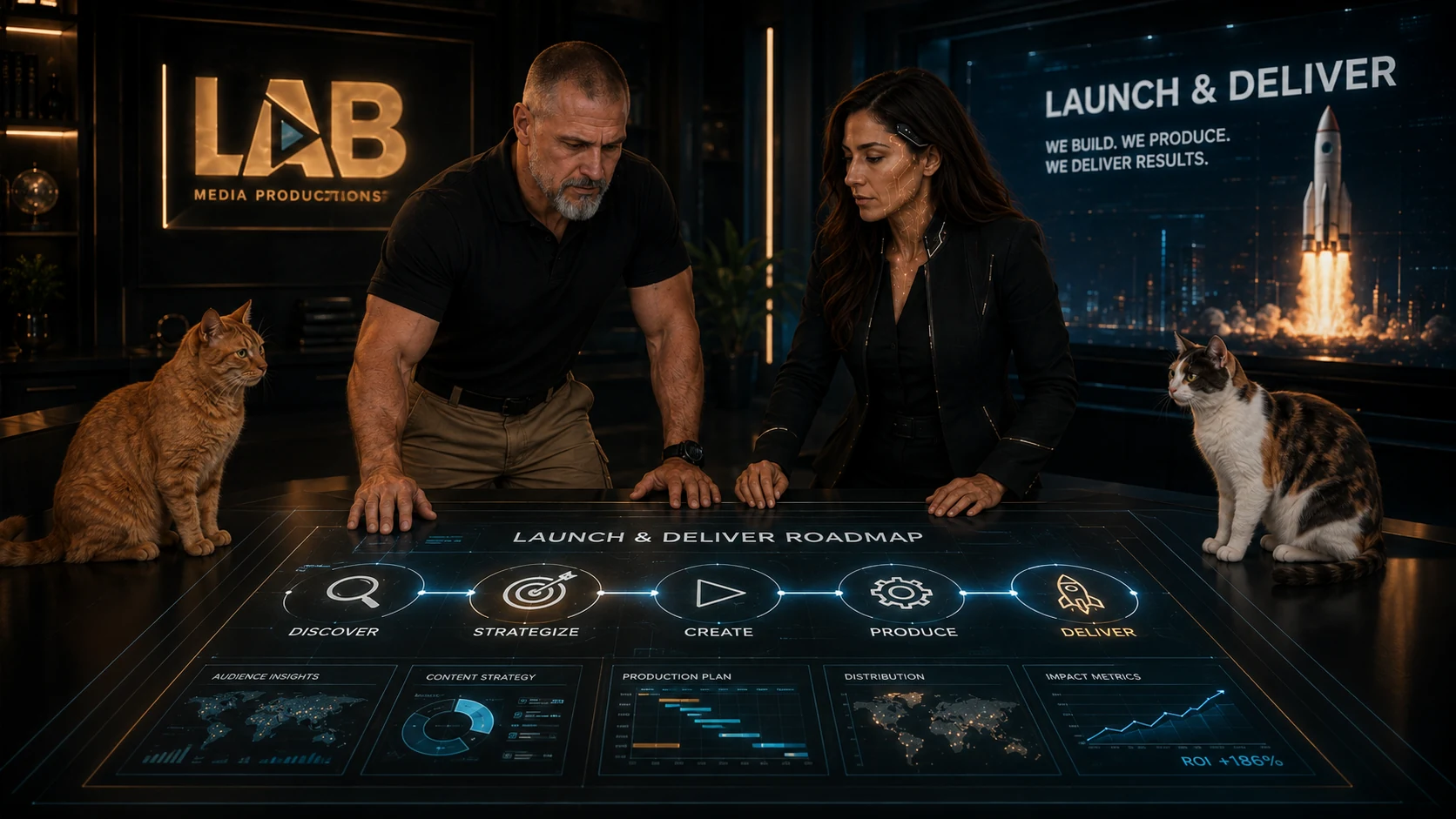
LAB Media Productions team reviewing a launch and delivery roadmap with Thorin and Adeleine
FINISH LINE / IN VIEW
THE FINISH / LAUNCH OR DELIVERYThe end should feel expected, not mysterious.
You know what is being finished, what you receive, and what happens after it is ready.

Bring the idea. We can help name the next step.

You do not need to know which service to ask for. Tell us what you want to change, what already exists, and what matters most. We will help turn that into a clear plan.